Terrestrial Genomics and Adaptive Biodesign
Genomic Research and Molecular Diversity
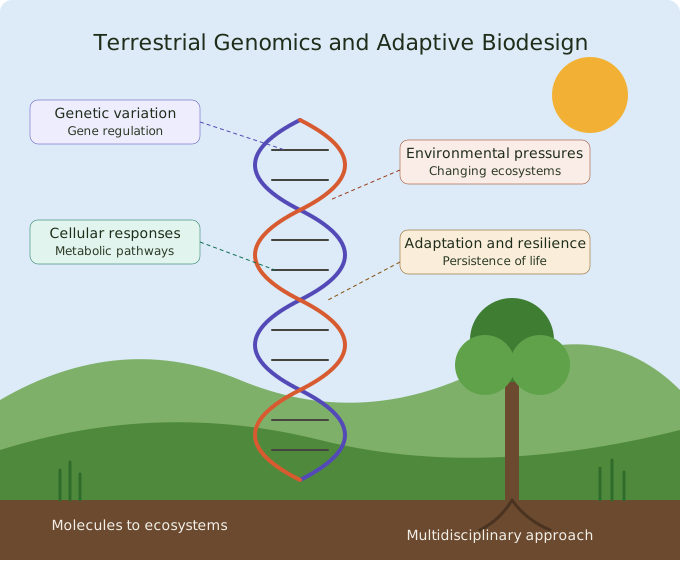
Genomic research provides essential insights into the organization, function, and variation of genetic material. By examining DNA sequences, gene structures, regulatory elements, and molecular interactions, researchers can investigate the biological characteristics that distinguish organisms and influence their responses to environmental conditions.
Comparative genomics supports the identification of similarities and differences among species, helping researchers investigate evolutionary relationships and patterns of biological diversification. Advances in sequencing technologies and computational biology have expanded the possibilities for studying complex genomes, identifying functional regions, and interpreting large-scale molecular datasets.
Major areas of genomic investigation include genome organization, sequence variation, genetic diversity, gene expression, transcriptional regulation, and the molecular mechanisms associated with environmental responses. Functional genomics further contributes to the characterization of genes and biological pathways, supporting investigations into the relationships between genetic information and observable biological characteristics.
The integration of these research areas contributes to a more comprehensive understanding of the molecular foundations of terrestrial organisms.

Molecular Biology and Cellular Regulation
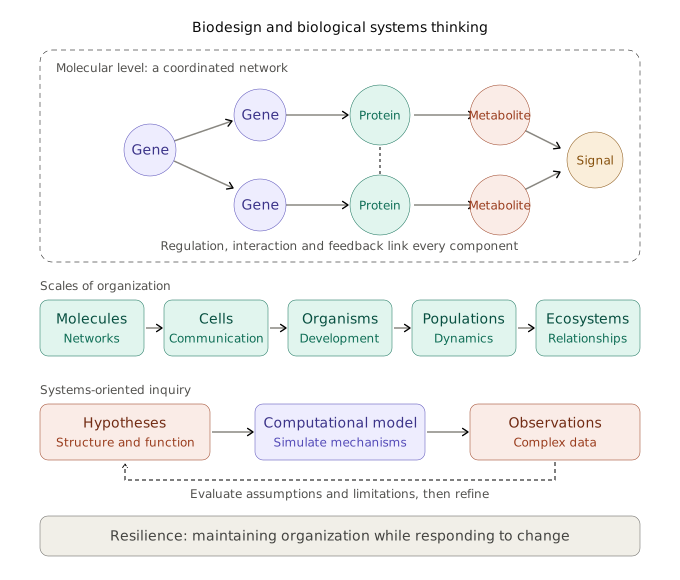
Molecular biology provides the foundation for investigating the mechanisms that govern cellular activity. DNA replication, transcription, translation, protein regulation, and intracellular signaling form interconnected processes that influence cell growth, differentiation, metabolism, and responses to environmental stimuli.
The regulation of gene expression is particularly important because it determines how genetic information is used under different biological conditions. Transcription factors, epigenetic mechanisms, signaling pathways, and regulatory RNA molecules can contribute to changes in cellular function without necessarily altering the underlying DNA sequence.
Investigating these mechanisms helps explain how organisms coordinate biological activities across different tissues, developmental stages, and environmental contexts.
Modern molecular research combines experimental techniques with analytical methods to characterize biological processes at increasingly detailed levels. These approaches provide opportunities to connect molecular events with broader physiological and ecological outcomes while improving the understanding of cellular organization and biological regulation.


Integrative Approaches to Biological Discovery
Complex biological questions rarely have a single explanation. Investigating terrestrial systems often requires the integration of genomic information, molecular measurements, physiological observations, ecological datasets, and computational analyses.
Integrative research connects different levels of biological organization to identify patterns that may not be apparent when datasets are examined independently. Genetic variation, for example, can be evaluated alongside gene expression, environmental measurements, and observable biological traits to investigate potential relationships between molecular mechanisms and organism responses.
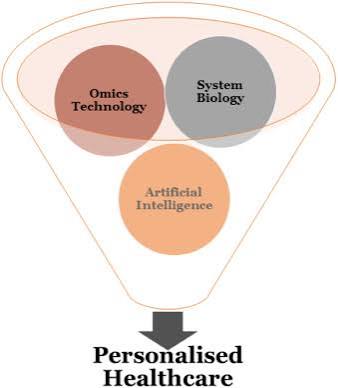
Multi-omics approaches extend this perspective by combining information from genomics, transcriptomics, proteomics, and metabolomics. These complementary sources of evidence can help characterize biological systems more comprehensively, although differences in data quality, measurement scales, and analytical requirements must be considered.
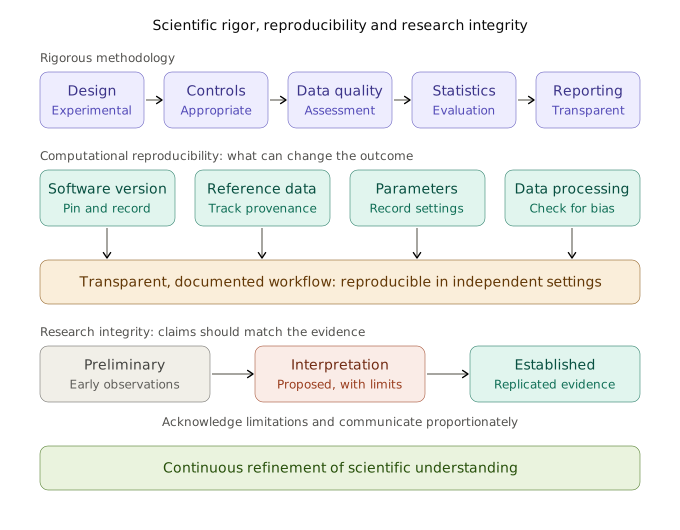
Effective integration depends on careful experimental design, appropriate analytical methods, reproducible workflows, and transparent interpretation of results. By connecting complementary disciplines, researchers can develop more detailed explanations of biological processes and identify new questions for experimental investigation.
Scientific Rigor, Reproducibility, and Research Integrity